
Menu
Menu

Install this application on your home screen for quick and easy access when you’re on the go.
Just tap then “Add to Home Screen”

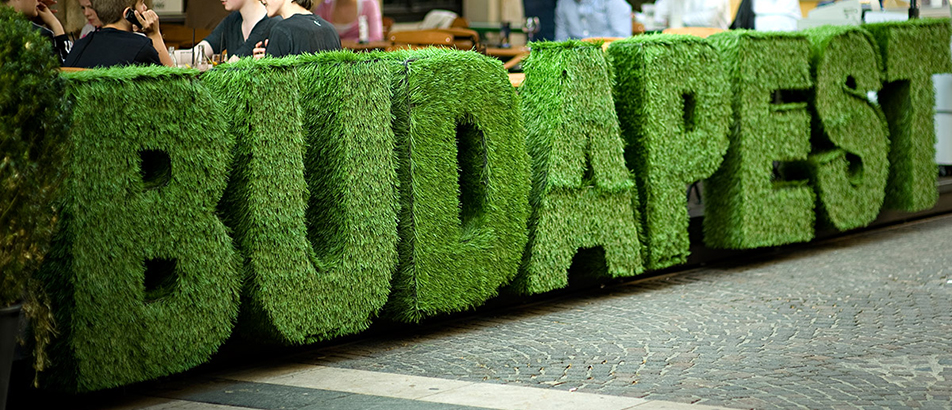
Budapest is one of the most attractive cities in Europe. It boasts two UNESCO World Heritage Sites and is steeped in history, yet it is also hip, and modern.
Warm summer evenings can be spent in one of the city's quirky ruin bars set in dilapidated buildings – and do make time to visit one of Budapest's hot spring spas or thermal baths.
Central European University
Nádor utca 15
1051 Budapest
Interactive map showing location of Summer School and labs
If you’re a citizen of a European country, or of Australia, Canada, Israel, Japan, New Zealand and the USA, you do not require a visa to visit Hungary, provided you stay no more than 90 days. Check visa requirements on the Hungarian Foreign Ministry website
Hungary has signed up to the Schengen Agreement, so if you have a valid visa for any other Schengen-member country, it is also valid in Hungary.
The Hungarian Forint (Ft) is sometimes referred to as HUF. At 15 November 2018, €1 = 322Ft. Coins come in six denominations: 5, 10, 20, 50, 100 and 200 Forint, and banknotes in 500, 1000, 2,000, 5,000, 10,000 and 20,000 Forint. Some places may also accept Euros.
ATMs (cashpoints) around the city accept all major credit and debit cards, as do the majority of shops and restaurants.
You'll find a cashpoint in the lobby of CEU's Nador 9 building. Other ATMs close to CEU:
CEU is surrounded by a huge amount of restaurants offering a wide variety of cuisine to suit all budgets. Most restaurants serve food until 23:00.
Map showing restaurants close to CEU
Restaurant service is not usually included in the bill, but sometimes it is, so do check before leaving a tip. Standard amount is 10%–15%, in cash. It is not usual to tip in bars, unless drinks are served to your table. If you are tipping a taxi driver, it is common to round up the fare.
We strongly recommended buying travel and/or health insurance prior to travelling.
If you are a citizen of a European Economic Area country or Switzerland you can apply for a European Health Insurance Card (EHIC) which allows you access to state-provided healthcare in these countries at a reduced cost, or sometimes for free. The EHIC does not cover private medical healthcare costs and therefore is not an alternative to travel insurance.
You do not need any vaccinations to visit Hungary, but the World Health Organisation recommends all travellers to be covered for diphtheria, tetanus, measles, mumps, rubella and polio.
The official language is Hungarian; however, English and German are the most commonly used second languages.
Many libraries in Hungary have free or very cheap internet terminals. Around Budapest, many restaurants and cafés offer free WiFi.
CEU has its own WiFi; personalised login details will be given to you when you register.
You can make domestic and international calls from public telephones; they take coins or phonecards, which you can buy at post offices and newsstands. You may want to buy a rechargeable or prepaid SIM card.
Useful numbers
| Hungary Country Code | 00 |
| International Direct Dial code | 36 |
| Budapest City Code | 1 |
| General Emergency Line | 112 |
| Ambulance | 104 |
| Fire | 105 |
| Police | 107 |
| General Enquiries | 199 |
Numerous Post Offices around the city, generally open Monday to Friday, 08:00–18:00.
2-pin, round prong plugs; 230V/50hz
Contact Anna Foley on methodsschool@ecpr.eu