
Menu
Menu

Install this application on your home screen for quick and easy access when you’re on the go.
Just tap then “Add to Home Screen”
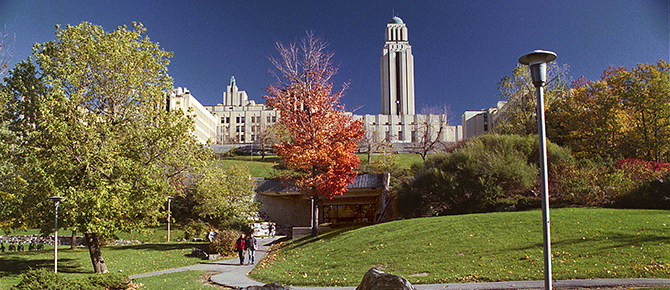
Registration, the book exhibition and all Panels will take place at 3200 Jean-Brillant Street, Montréal.
Situated on the northern slope of Mount Royal, the Université de Montréal boasts an exceptional natural setting. Combining green space and modern architecture, the campus is steeped in the great tradition of North American universities. With over 30 buildings, some of which are connected by an underground network, the campus is dominated by the majestic Art-Deco tower of the Roger-Gaudry Building - a distinctive feature of Montreal's unique silhouette. Côte-des-Neiges, one of the city's most cosmopolitan and vibrant districts, offers the university community a wide range of shops and services, including a cultural centre, bookstores, boutiques, restaurants and cafes. The University of Montréal is situated approximately 15km (18 minutes) from the Aéroport Montréal Trudeau.
Those planning to travel on to the USA after the General Conference (for example for the APSA meeting in San Francisco) are advised to check in advance whether they require a Visa for entry into the USA. For further details check the ESTA website here or the relevant Embassy about the Visa Waiver programme.
In the coming months, Canada will introduce a new entry requirement, known as an Electronic Travel Authorization (eTA), for certain international travellers who fly to Canada. Entry requirements for other methods of travel (land, sea) will not change. Starting on August 1, 2015, travellers will be able to apply for an eTA online. As of March 15, 2016, travellers will need an eTA before they board a flight to Canada. If you do not normally need a visa to enter Canada, you will need to get an eTA. Some exemptions will apply. Applying for an eTA is an easy online process that will take just a few minutes. It only costs $7 Canadian. All you need is your passport, a credit card, and an email address. Further information can be found here.
By Air: All international and domestic flights arrive at Montreal Pierre Elliot Trudeau International Airport (YUL), previously known as Dorval, which is located about 20km from downtown Montreal.
By Bus: The Bus Terminal (Gare d'autocars de Montréal or Montreal Bus Station) is located at 1717 Berri, between de Maisonneuve and Ontario streets right by the Berri-UQAM metro (subway) station. There are normally taxis available outside the main doors on Berri for onward travel.
By Train: Central Station (Gare central) is located downtown and is connected through the underground tunnels to both the Bonaventure metro station on the orange line and, a little further, McGill metro on the green line. Note that there is quite a bit of walking through tunnels and with escalators and a few short flights of steps to get between the station and the metro stations, so if you have luggage might be advised to take a taxi to your destination.
By Car: To cross into Canada from New England, most people take US Interstate 89 from Vermont through to the Canadian border or the I-87 from upstate New York. Citizens of many countries - particularly the US, European, and commonwealth countries - do not require visas, but others may so please see the list. US citizens must have a valid US Passport or Passport Card to re-enter the US.
Further information is available at Information for Visitors to Canada.
Crossing the St. Lawrence: Champlain Bridge
It is about one hour from the US/Canadian border to Montreal and you must cross the St. Lawrence river. The Champlain Bridge is now under a several-year reconstruction plan which can cause substantial delays, and during rush hour there are reserved bus lanes so it is best to time your arrival before or after these points. If traffic is bad, there are other bridges - the Mercier, Victoria, Jacques Cartier, and the Hippolyte-Fontaine tunnel that you can take, although it may increase your journey time.
By Train: The airport is not well served by rail. There is no direct connection to the train station from the airport and the infrequent schedule is based more on commuters or inter-city travel. There are two train services (with different train stations): the AMT commuter train requires that you first take the 204 Cardinal direction east for $3 to the Dorval commuter train station, and then the Vaudreuil/Hudson-to-Montreal train to downtown for $7; see the schedule. Via Rail has a free shuttle to the Via Dorval train station, although a single ticket to downtown is $20 + tax; if you are already travelling by train to Montréal to catch a plane, make sure to choose Dorval as your destination.
By Bus: The 747 Airport service runs 24 hours, seven days a week. It services nine stops in each direction to and from airport, taking between 45 to 60 minutes depending on traffic conditions. See the timetable below for busses with disabled access.
Fare cards can be purchased at the airport on the international arrivals level, in every metro station and at the central bus terminal (Gare d'autocars de Montréal), which is close to Berri UQAM metro station. Current fares are:
Timetable to downtown
| From Monday 0500 - Saturday 0500 | ||||
| A - 60997 Aéroport International Montréal Trudeau |
B - 61332 Station-Lionel-Groulx / Saint-Jacques |
C - 52530 René-Lévesque / Mansfield |
Arrival Berri / Ontario |
|
| 0500 | 16 56 | 37 | 44 | 53 |
| 0600 | 31 | 17 | 24 | 33 |
| 0700 | 07 38 | 03 39 | 12 48 | 22 58 |
| 0800 | 08 38 | 07 37 | 16 46 | 00 27 57 |
| 0900 | 08 38 | 07 37 | 16 46 | 00 27 57 |
| 1000 | 02 24 44 | 04 20 42 | 13 29 51 | 25 41 |
| 1100 | 04 24 41 56 | 02 22 42 59 | 11 31 51 | 03 23 43 |
| 1200 | 11 26 41 56 | 14 29 44 59 | 08 23 38 53 | 03 20 35 50 |
| 1300 | 11 25 39 52 | 14 29 43 57 | 08 23 38 52 | 05 20 35 50 |
| 1400 | 03 14 22 32 40 49 59 | 10 21 32 42 54 | 06 19 30 41 51 | 04 18 31 42 53 |
| 1500 | 10 20 30 40 50 | 02 11 21 32 42 52 | 03 11 20 30 41 51 | 03 15 23 32 42 54 |
| 1600 | 00 10 > | 03 13 23 33 41 > | 01 12 22 32 42 50 > | 04 14 25 35 46 56 |
| 1700 | 02 10 > 31 40 50 | > 27 35 > 55 | > 36 44 > | 04 > |
| 1800 | 00 10 20 30 40 49 57 | 03 12 21 30 39 49 59 | 04 12 21 30 39 48 58 | > 23 32 41 50 59 |
| 1900 | 05 14 23 32 41 50 59 | 08 16 24 33 41 49 58 | 08 17 25 33 41 49 57 | 09 19 28 35 43 51 59 |
| 2000 | 08 19 31 47 | 07 16 25 36 48 | 06 15 24 33 44 56 | 07 16 25 34 43 54 |
| 2100 | 01 16 31 49 | 04 18 33 48 | 12 26 41 56 | 06 22 36 51 |
| 2200 | 07 25 43 | 06 24 42 | 14 32 50 | 06 24 42 |
| 2300 | 01 19 37 56 | 00 18 36 54 | 08 26 44 | 00 18 36 54 |
| 0000 | 17 47 | 13 34 | 02 21 42 | 12 31 52 |
| 0100 | 32 | 04 49 | 12 57 | 22 |
| 0200 | 31 | 48 | 56 | 07 |
| 0300 | 30 | 47 | 55 | 06 |
| 0400 | 30 | 47 | 55 | 05 |
| 0500 | 05 | |||
BOLD times: Low-floor buses with wheelchair access
>: During this period, service is every 7 minutes or less
By Taxi: Rates are fixed at CAD$40 to downtown from the airport, and by the meter to other destinations with a minimum charge of CAD$17. It is customary to tip the driver around 10-20%.
By Car: The main highway 20 normally takes 15-20 driving minutes to downtown, but rush hour traffic or road construction can take twice as long. For a scenic route (which is slower) from the airport exit and follow the "av. Dorval" (Dorval Avenue) signs, then continue to Lakeshore Road (Bord-du-Lac). Take a left and enjoy the sights to downtown following the shore of Lac Saint-Louis passing through historic Lachine, Ville St-Pierre or the west end of Montreal.