
Menu
Menu

Install this application on your home screen for quick and easy access when you’re on the go.
Just tap then “Add to Home Screen”

Level
Level: Introductory
Member rate £572.50
Non-Member rate £1,145.00
Early bird discount available until 14 December 2026.
Save £45.00 Loyalty discount applied automatically*
Save 5% on each additional course booked
* If you attended a qualifying previous Methods School in 2026, you qualify for £45.00 off your course fee.
Date: Monday 15 – Friday 19 February 2027
Time: 13:30 – 16:30 CET
This interactive course uses advanced pedagogical tools and is designed for master's-level students and above. It runs as three-hour live sessions on Zoom over five days, with course materials and pre-course readings available on our Learning Management System at least two weeks before the start. Office hours are also available for one-to-one consultations on your own project.
The course is limited to 18 participants, ensuring that the teaching team can address the individual needs of each participant.
This course introduces participants to interviewing as a technique of data collection in political science, sociology and related disciplines. It treats interviewing as both an art and a technique that requires training, practice and reflexivity. The course follows the life cycle of an interview project: deciding when interviews are the right tool and which type to use; selecting and accessing interviewees; designing instruments and protocols, including for sensitive topics; and conducting interviews ethically. It then goes beyond the basics, showing how interviews can generate evidence for causal claims, particularly in process tracing, and how to code, evaluate and transparently report interview data.
Sessions combine lectures, in-class discussions of exemplary applications, and short exercises built around the instructors’ own interview material and/or participants’ own projects. By the end of the course, participants will be able to design a coherent interview strategy for their own research and to critically assess published work that relies on interviews.
3 ECTS credits awarded for engaging fully in class activities.
1 additional ECTS credit awarded for completing a post-course assignment.
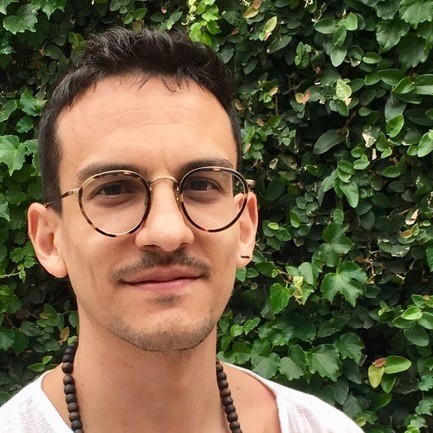
Juan Masullo is Assistant Professor in the Department of Social and Political Sciences at the University of Milan and Associate Researcher at Leiden University.
His research examines how individuals and communities make decisions in contexts of violence and how these experiences shape political attitudes toward peace, security, and democracy. Methodologically, he specialises in qualitative and mixed-methods research, with particular expertise in fieldwork, interviewing, case studies, and process tracing, often integrating observational and experimental evidence. He has conducted extensive field research in Latin America and Europe and regularly teaches PhD-level methods courses across Europe. His work has received major recognition, including the APSA Alexander George Best Article Award and the NEPS Medal for Best Publication in Peace Science.
Interviews are the most widely used data collection technique among social scientists doing field research, yet many researchers still assume that anyone who can talk can interview. This course rejects that assumption. It offers a structured introduction to interview research and then goes beyond the basics, linking design, data collection and analysis in a single framework.
Sessions combine lectures, guided discussions of exemplary studies, and exercises in which participants develop the key pieces of their own interview strategy or work on existing transcripts or other interview material.
Throughout the course, methods are connected to real-world applications through published studies, examples from my own fieldwork, and participants’ projects. Participants are encouraged to bring their own research questions and, if they have them, anonymised transcripts.
The course is organized across five sessions.
Session 1 asks when interviews are the right tool, what interview data can and cannot tell us, and how to match types of interviews (elite and non-elite; individual and group; structured, semi-structured and unstructured) to research goals.
Session 2 covers who to interview and how to reach them: purposive, snowball and stratified sampling, the question of “how many”, gaining access, and the ethics of interview research, from informed consent to data protection.
Session 3 turns to designing instruments and conducting interviews: protocols, question writing, probing and listening, sensitive topics (rephrasing, preambles, vignettes and proxy interviewing), field notes, and a brief look at remote interviewing and technical tools in interview research.
Session 4 shows how interviews can generate evidence for causal claims, with a focus on motivated action and on aligning interviewing with process tracing.
Session 5 covers coding interview transcripts, with a hands-on exercise and a short overview of QDA software, and how to report and evaluate interview data credibly and transparently.
An interview research plan (sampling and questionnaire design) for the participant’s own project for an additional ECTS credit.
Basic understanding of social science research design; no prior experience with interviewing is required.
No software is required, but a free trial of a QDA package (MAXQDA, NVivo or ATLAS.ti) could be handy.
500-word research project memo due one week before the course, detailing how interviewing fits into the research design plan.
The course includes three hours of live teaching each day for five days, alongside readings and other learning activities.
Once you have registered and paid, you will receive access to our Learning Management System (LMS) approximately two weeks before the course start date. Course materials, including pre-course readings, will be available here. Allow approximately 20 hours per week before the course to review the materials and complete readings and any pre-course tasks.
During the course week, you should allow approximately two to three hours per day for preparation and assignments, in addition to the live teaching sessions.
The course offers the opportunity to earn three ECTS credits. To earn a fourth credit, you will need to complete a post-course assignment involving approximately 25 hours of work.
This course description may be subject to subsequent adaptations (e.g. taking into account new developments in the field, participant demands, group size, etc.). Registered participants will be informed at the time of change.
By registering for this course, you confirm that you possess the knowledge required to follow it. The instructor will not teach prerequisite items. If in doubt, please contact us before registering.