
Menu
Menu

Install this application on your home screen for quick and easy access when you’re on the go.
Just tap then “Add to Home Screen”
We’re excited to welcome Julia Schulte-Cloos and Robert Huber as EJPR's new Editors of Open Science – a major step as the journal prepares to go fully open access.
A leading voice in political science, the European Journal of Political Research is placing open science at the heart of its agenda under its recently appointed editorial team. With Julia and Robert now on board, the team will steer EJPR through its flip to open access next year, in partnership with Cambridge University Press.
This strategic shift will make all EJPR content freely available to the global scholarly community, reinforcing the journal’s commitment to rigorous, transparent, and accessible research.
The Editors of Open Science will play a key role in ensuring EJPR continues to set the standard for excellence in political science amid a rapidly evolving publishing landscape. They will:
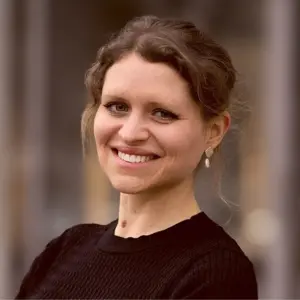
Julia Schulte-Cloos
Philipps-Universität Marburg
Julia investigates the impact of contemporary political divisions on citizen identities, liberal democratic norms, and party politics. She explores these dynamics through the lens of political behaviour and computational social science.
An outspoken advocate for open science practices, Julia offers advanced training programmes and develops tools for reproducible research workflows to enhance computational reproducibility in the social sciences.
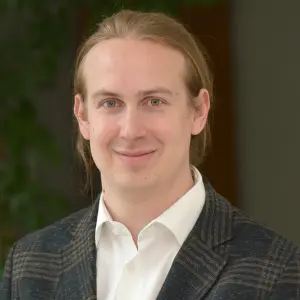
Robert Huber
Universität Salzburg
Robert’s work explores the impact of globalisation on liberal democracy. Using state-of-the-art methods, from qualitative case studies to causal inference with observational data and experimental designs, he investigates how populism and climate politics exert pressure on liberal democracy.
A strong advocate of open science, Robert leads collaborative, data-driven projects which are valuable sources of knowledge for academic and policy communities alike.