Menu
Menu

Install this application on your home screen for quick and easy access when you’re on the go.
Just tap then “Add to Home Screen”
By Diego Garzia, Stefan Marschall
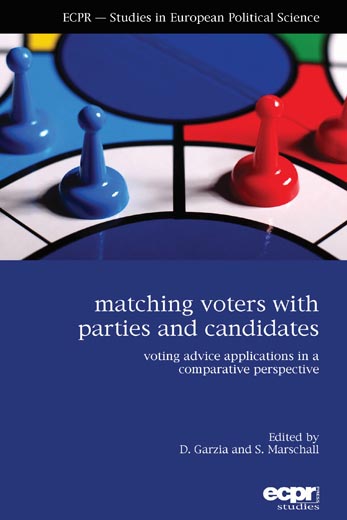
This book focuses on a new source of electoral intermediation – Voting Advice Applications – which widens the interest scholars have long had for traditional mobilising actors of the vote. This new form of intermediation lets citizens interact with parties and issues on the web, empowering them and allowing an informed political choice. The book is a thorough inquiry into the impact of VAAs on people’s political choice, and a thoughtful methodological reflection on the new tool by prominent experts in the field. A rewarding read for political behaviour scholars and National Election Study teams.
-- Paolo Bellucci, University of Siena
Garzia and Marschall’s book comes at the right time. Voting Advice Applications are redefining how political parties and citizens communicate with each other. But how are they constructed, and what are the intended and unintended effects of their use? This volume offers encompassing, state-of-the-art answers to these questions by an impressive line-up of leading researchers in the field. It also opens new perspectives on what VAAs can tell us about the workings of democratic politics. And it formulates norms that every VAA should comply with. This will be the most comprehensive and authoritative resource on VAAs for years to come.
-- Kees Aarts, University of Twente
Diego Garzia is an SNSF Eccellenza Professor of Political Science at the University of Lausanne, and also a recurring Visiting Fellow at the Robert Schuman Centre for Advanced Studies in Fiesole. He held a Jean Monnet Fellowship at the European University Institute (2012–2014) and an SNSF Ambizione Fellowship at the University of Lucerne (2017–2019). He currently serves as founding convenor of the ECPR Research Network on Voting Advice Applications and as a member of the Scientific Committee of the Italian National Election Study (ITANES). With ECPR Press, he has already published Matching Voters with Parties and Candidates (2014).
The ECPR may receive a commission from the Amazon Services LLC Associates Program or the Google eBooks™ Affiliate Program for qualifying purchases made through the product links on our website.