Menu
Menu

Install this application on your home screen for quick and easy access when you’re on the go.
Just tap then “Add to Home Screen”


Click on the course title below for the course instructor's profile
WA103. Short Introduction to R
WA108. Automated Web Data Collection with R
WA109. Combining Data from Different Sources: Different Techniques, Different Worlds
WA110. Weighting Techniques to Handle Survey Non-response (Advanced)
WA111. Introduction to Qualitative Data Analysis with Atlas.ti
WA112. Introduction to NVivo for Qualitative Data Analysis
WB101. Research Design Fundamentals
WB102. Comparative Research Designs
WB103. Introduction to Qualitative Interpretive Methods
WB105. Introduction to Statistics for Political and Social Scientists
WB106. Causal Inference for Political and Social Sciences
WB107. Knowing and the Known: The Philosophy and Methodology of the Social Sciences
WB108. Ethical Issues in Field Research Methods
WC101. Interpretative Interviewing
WC103. Focus Groups – From Qualitative Data Generation to Analysis
WD101. Quantative Text Analysis
WD102. Introduction to Applied Social Network Analysis
WD202. Writing Ethnographic and Other Qualitative-Interpretive Research: Learning Inductively
WD203. Advanced Process Tracing Methods
WD204. Advanced Topics in Set-Theoretic Methods and QCA
WD205. Advanced Multi-Method Research
WD206. Advanced Qualitative Data Analysis
WD207. Advanced Discrete Choice Modelling
WD208. Interpreting Binary Logistic Regression Models
WD209. Inferential Network Analysis
WD210. Introduction to Bayesian Inference
WD211. Panel Data Analysis: Hierarchical Structures, Heterogeneity and Serial Dependence
WD212. Multilevel Regression Modelling
WD213. Correspondence Analysis
WD214. Agent-Based Modelling in the Social Sciences
WD215. Age-Period-Cohort Analysis
WD218. Structural Equation Modeling (SEM) with R
WD219. Respondent-Driven Sampling (RDS) (Using social networks to sample and analyse data from hard-to-reach and hidden populations)
| No Photo |
Holger Döring is a lecturer in political science at the Centre for Social Policy Research (ZeS), University of Bremen. His research and teaching interest focuses on institutions and democratic delegation, political careers in Western democracies and new types of data collection. He has successfully applied programming technologies (particularly Python and R) to establish ParlGov.org, a modern data infrastructure on parties, elections and cabinets. |
|
|
|
WA103. Short Introduction to R Florian Weiler is a post-doctoral researcher at the University of Bamberg at the Professorship of Empirical Political Science, where he teaches both statistics and content courses. Before joining the University of Bamberg he worked as a research assistant and earned his doctoral degree at ETH Zurich. His main research interests are in the fields of environmental politics and democracy research. Thorsten Schnapp is a research assistant at the University of Bamberg and the Chair of Statistics and Econometrics, where he teaches R courses both on Bachelor’s and Master’s level. He holds a Diploma in sociology from the University of Munich and a Master of Science degree in survey statistics from the University of Bamberg. His main research interests are in the fields of statistical algorithms and dynamical systems, like Markov Chain Monte Carlo methods and their application to Multiple Imputation. |
|
 |
Simon Fink works as an Assistant Professor at the Chair for Comparative Politics, University of Bamberg. His substantive research focuses on policy diffusion and privatisation of public enterprises. |
|
 |
Florian Meinfelder is a lecturer at the Department of Statistics and Econometrics at the University of Bamberg, teaching, courses including Bayesian Statististcs, statistical analysis with missing data, and courses on R programming. His research interest focuses on robust Multiple Imputation methods, as well as on matching algorithms for missing data and causal inference problems. |
|
 |
Wolfgang Luhan is Assistant Professor of economics at the Ruhr-University Bochum’s Economics department and Director of the Bochum Lab for Experimental Economics (RUBex). His research focus lies on behavioral (macro) economics, bargaining situations and markets. He has been doing experimental research since 2004 and has taught numerous classes on experimental research methods and z-Tree programming. |
|
 |
Rens Van de Schoot obtained his PhD (cumlaude) on applying Bayesian statistics to real life data at the department of Methods and Statistics. Currently, he is appointed as Assistant Professor at Utrecht University and as extra-ordinary Professor at the Optentia research programme, North West University in South-Africa. He is Associate Editor of the European Journal of Developmental Psychology, Topic Editor for Frontiers in Psychology, Statistical Adviser for the European Journal of Psychotraumatology, and a member of the editorial board for the International Journal of Behavioural Development. |
|
 |
WA108. Automated Web Data Collection with R Peter Meissner is a researcher in the Institutional Design in European Democracies (IDEP) working group and doctoral student at the University of Konstanz. Part of his work for IDEP is the provision of semi-automated data gathering infrastructure for which he extensively uses R and database systems. His substantive research interests include political institutions in general and parliaments, the legislative process as well as political careers in particular. As a co-author of the book ‘Automated Data Collection With R’, forthcoming at Wiley, he has been working on web scraping techniques with R over the past years. |
|
 |
WA109. Combining Data from Different Sources: Different Techniques, Different Worlds Susanne Rässler (Ph.D. in statistics, habilitation in statistics and econometrics) is a full Professor at the Otto-Friedrich-University Bamberg, leading the Department of Statistics and Econometrics. Before this she was head of the Competence Centre Empirical Methods of the Institute for Employment Research and head of the Department for Product and Program Analysis of the Federal Employment Agency in Germany. Susanne has published books on survey sampling, statistical matching/data fusion, and prediction techniques plus many articles touching very different topics. From 2007 to 2013 she was member of the German census committee and also served as a member of the German data council. Her special research interests are methods for handling missing data, multiple imputation, Bayesian methods, and matching techniques for causal analysis, as well as data fusion. |
|
 |
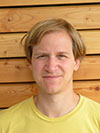
WA110. Weighting Techniques to Handle Survey Non-response (Advanced) Hans Walter Steinhauer is a research assistant at the Leibniz Institute for Educational Trajectories (LIfBi) working on sampling designs and weighting strategies for complex survey designs. He is also a lecturer at the Department of Statistics and Econometrics at the University of Bamberg teaching sampling techniques and applied statistics using R. |
|
 |
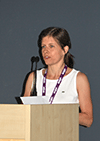
WA111. Introduction to Qualitative Data Analysis with Atlas.ti Johannes Starkbaum studied sociology at the Universities of Vienna (2003-2009) and Copenhagen (2005). From 2004 till 2007 he started working in different projects on knowledge- and learning technologies and from 2008-2009 on the sociology of families and fatherhood. Johannes teaches qualitative methods and computer assisted analysis since 2009 and works in several international projects doing comparative, qualitative research using Atlas.ti. |
|
 |
WA112. Introduction to NVivo for Qualitative Data Analysis Marie-Hélène Paré is a lecturer in qualitative research methods and programme evaluation at the Open University of Catalonia and an international consultant in qualitative data analysis. She was educated in Quebec, Beirut and Oxford. She is a registered social worker who worked and conducted research in violence against women and community participation in humanitarian action. She taught social work at St-Joseph University in Beirut, Lebanon, and has lectured on qualitative data analysis in more than thirty universities worldwide. Her methodological interests lie in qualitative data analysis, qualitative evidence synthesis, indigenous epistemologies, and participatory methodologies. She teaches qualitative data analysis at the ECPR Summer School and the advanced qualitative analysis course at the ECPR Winter school. |
|
 |
WB101. Research Design Fundamentals Samo Kropivnik gained his PhD in the field of political science at the University of Ljubljana (UL) in 1997. Currently he is Associate Professor of Social Sciences Methodology at the Faculty of Social Sciences (UL) and Senior Researcher at the Institute of Social Sciences (ULFSS). He teaches various courses on marketing research and political science methodology. Samo also contributes to research projects on political participation and communications by dealing pragmatically with research approaches and designs, with exploratory and descriptive research methods and techniques in general and in particular with multivariate methods such as clustering, factor analysis and regression. |
|
 |
WB102. Comparative Research Designs Benoît Rihoux is Professor of political science at the Centre de Science Politique et de Politique Comparée of the Université Catholique de Louvain (Belgium). His substantive research interests include political parties, new social movements, organisational studies, political change, and policy processes. He is manager of the COMPASSS international research group on systematic comparative methods and plays a leading role in the development and refinement of these methods, bringing together scholars from Europe, North America and Japan in particular. He is also joint Convener of international initiatives around methods more generally, especially through the ECPR. He has recently published Innovative Comparative Methods for Policy Analysis: Beyond the Quantitative–Qualitative Divide (Springer/Kluwer, ed., with Heike Grimm, 2006) and Configurational Comparative Methods : Qualitative Comparative Analysis (QCA) and Related Techniques (Sage, ed., with Charles Ragin, 2009), and has published extensively on systematic comparative methods (QCA in particular) and their applications in diverse fields, especially policy and management related with interdisciplinary teams. |
|
 |
WB103. Introduction to Qualitative Interpretive Methods Marie Østergaard Møller has Ph.D. MA in political science and senior researcher at KORA, Denmark. Her research interests include social and political categories, categorisation, Frontline work, welfare state research, classic social theory of solidarity and systematic qualitative methods. Her work has appeared in Social Policy and Administration 'Disciplining Disability' (2012), in Distinktion – Scandinavian Journal of Social Theory 'Categories and Categorisation: Towards a Comprehensive Sociological Framework' (2011) and in Critical Policy Studies 'Constructing at-risk Target Groups' (2013). |
|
|
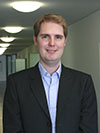
Wolfgang Luhan is Assistant Professor of economics at the Ruhr-University Bochum’s Economics department and Director of the Bochum Lab for Experimental Economics (RUBex). His research focus lies on behavioral (macro) economics, bargaining situations and markets. He has been doing experimental research since 2004 and has taught numerous classes on experimental research methods and z-Tree programming. |
|
 |
WB105. Introduction to Statistics for Political and Social Scientists Florian Weiler is a post-doctoral researcher at the University of Bamberg at the Professorship of Empirical Political Science, where he teaches both statistics and content courses. Before joining the University of Bamberg he worked as a research assistant and earned his doctoral degree at ETH Zurich. His main research interests are in the fields of environmental politics and democracy research. |
|
|
WB106. Causal Inference for Political and Social Sciences Susanne Rässler (Ph.D. in statistics, habilitation in statistics and econometrics) is a full Professor at the Otto-Friedrich-University Bamberg, leading the Department of Statistics and Econometrics. Before this she was head of the Competence Centre Empirical Methods of the Institute for Employment Research and head of the Department for Product and Program Analysis of the Federal Employment Agency in Germany. Susanne has published books on survey sampling, statistical matching/data fusion, and prediction techniques plus many articles touching very different topics. From 2007 to 2013 she was member of the German census committee and also served as a member of the German data council. Her special research interests are methods for handling missing data, multiple imputation, Bayesian methods, and matching techniques for causal analysis, as well as data fusion. |
|
 |
WB107. Knowing and the Known: The Philosophy and Methodology of the Social Sciences Robert Adcock is Assistant Professor of Political Science at George Washington University in Washington, DC. His research focuses on the politics of knowledge, the transatlantic history of the social sciences and their relationship to liberalism, and the philosophy and methods of the social sciences, especially qualitative and interpretive methods. He is the author of Liberalism and the Emergence of American Political Science: A Transatlantic Tale (Oxford UP, 2014), was the co-editor of Modern Political Science: Anglo-American Exchanges since 1880 (Princeton UP, 2007), has authored or co-authored articles in the American Political Science Review, History of Political Thought, the Journal of Theoretical Politics and elsewhere, and edited the newsletter of the Qualitative and Multi-Method Research organised section of the American Political Science Association from Fall 2011 to Fall 2014. |
|
 |
WB108. Ethical Issues in Field Research Methods Peregrine Schwartz-Shea is Professor of Political Science at the University of Utah where she teaches courses in Qualitative-Interpretive Research Methods, Research Design, Public Adminstration, and Gender and Politics. She conducts research on interpretive methods and human subjects protection policy. With Dvora Yanow, she co-authored Interpretive Research Design: Concepts and Processes (Routledge 2012), the first volume in the Routledge Series on Interpretive Methods that they co-edit. |
|
 |
WC101. Interpretative Interviewing Lea Sgier is an assistant professor in political science at Central European University (CEU) in Budapest. Lea also lectures qualitative methodology in other contexts at University of Geneva, Graduate Institute Geneva, Essex Summer School, and Concordia Workshops in Social Science Research Methods, MontrealHer main research interests are in gender and politics (gender quotas, citizenship), interpretive methodologies (discourse analysis, qualitative interviewing) and social policy (dementia policy). |
|
| No Photo |
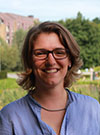
Diana Kapiszewski is assistant professor of government at Georgetown University. Her research interests include public law, comparative politics, and research methods. Her geographic focus is Latin America. She has published two books (one co-edited) and various articles on judicial politics in comparative perspective. Kapiszewski co-directs the Qualitative Data Repository (www.qdr.org), co-edits a Cambridge University Press book series focused on methods, has a co-authored book forthcoming on field research, and has published various articles on research transparency. |
|
 |
WC103. Focus Groups – From Qualitative Data Generation to Analysis Virginie Van Ingelgom is Research Associate Professor F.R.S. – FNRS (UCLouvain) and an associate research fellow of the Centre for European Studies, Sciences Po Paris. She is the author of several articles, on the issue of legitimacy at both the national and the European levels, on the possible emergence of a ‘European community’, and on the methodological issues of using qualitative comparative analysis. She is also the author of Integrating Indifference (ECPR Press, 2014) and she recently co-authored ‘Citizens’ Reactions to European Integration Compared. Overlooking Europe’ (2013, Palgrave). |
|
 |
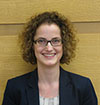
Mark Trappmann studied social sciences and mathematics in Duisburg and Groningen. He was awarded his doctorate in Sociology in 2003. He was then a post-doctoral researcher at the Department of Politics and Management at the University of Konstanz. He has been in charge of the Panel Study 'Labour Market and Social Security' (PASS) at the Institute for Employment Research since 2007. Since 2012 he is a professor for Sociology, esp. Survey Methodology at University of Bamberg. |
|
 |
WD101. Quantative Text Analysis Heike Klüver is Professor of Empirical Political Science at the University of Bamberg. Before coming to Bamberg, she worked as Junior Professor at the University of Konstanz and as a Postdoctoral Research Fellow at Nuffield College at the University of Oxford. Heike Klüver received her PhD from the University of Mannheim. Her research interests include European politics, interest groups, political parties, coalition governments and quantitative text analysis. |
|
 |
WD102. Introduction to Applied Social Network Analysis Dimitris Christopoulos has worked on a diverse number of research projects publishing work on political social networks. He has extensive experience in delivering post-graduate courses on network methodology. He has taught more than 200 graduate students on social networks in Universities across Europe including Barcelona, Bristol, Edinburgh, Essex, EUI, Milan and Roskilde. Dr Christopoulos is currently researching political entrepreneurship, cross-border policy networks and the effect of social media on political campaigns. He is the editor of the journal Connections and a Research Fellow at CEPS-Luxembourg. |
|
 |
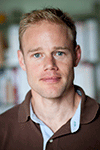
WD202.Writing Ethnographic and Other Qualitative-Interpretive Research: Learning Inductively Dvora Yanow Dvora Yanow is a policy/political and organisational ethnographer and interpretive methodologist whose research and teaching are shaped by an overall interest in the generation and communication of knowing and meaning in organisational and policy settings. Research topics include state-created categories for race-ethnic identity, immigrant integration policies and citizen-making practices, research regulation (ethics board) policies, practice theory and the life cycle, science/technology museums and the idea of science, and built space/place analysis. Her most recent book, Interpretive Research Design: Concepts and Processes (Routledge 2012), with Peregrine Schwartz-Shea, is the first volume in their co-edited Routledge Series on Interpretive Methods. |
|
 |
WD203. Advanced Process Tracing Methods Derek Beach is an Associate Professor at the University of Aarhus. His substantive research has focused upon EU integration, on which he has published two books, an edited volume, and numerous articles and chapters. He has recently published a book on process-tracing methodology with the University of Michigan Press, and has published several book chapters on process-tracing. |
|
 |
WD204.Advanced Topics in Set-Theoretic Methods and QCA Carsten Q. Schneider is Associate Professor of Political Science at Central European University, Budapest. His research focuses on regime transitions and the qualities of democracies. He is also working in the field of comparative methodology, especially on Qualitative Comparative Analysis (QCA) and its fuzzy set extension. He has published articles in several peer-reviewed journals and three books, among them the Cambridge University Press book 'Set-Theoretic Methods for the Social Science', co-authored with Claudius Wagemann, in 2012. |
|
 |
WD205. Advanced Multi-Method Research Ingo Rohlfing is Professor for Political Science, Qualitative Methods at the Bremen International Graduate School in the Social Sciences (BIGSSS). He holds a PhD in Political Science and is doing research on party competition and party organizations. In his research on methods, he is working on the case study method, QCA, and multi-method research. He has published in journals such as Comparative Political Studies and Sociological Methods & Research. |
|
|
WD206.Advanced Qualitative Data Analysis Marie-Hélène Paré is a lecturer in qualitative research methods and programme evaluation at the Open University of Catalonia and an international consultant in qualitative data analysis. She was educated in Quebec, Beirut and Oxford. She is a registered social worker who worked and conducted research in violence against women and community participation in humanitarian action. She taught social work at St-Joseph University in Beirut, Lebanon, and has lectured on qualitative data analysis in more than thirty universities worldwide. Her methodological interests lie in qualitative data analysis, qualitative evidence synthesis, indigenous epistemologies, and participatory methodologies. She teaches qualitative data analysis at the ECPR Summer School and the advanced qualitative analysis course at the ECPR Winter school. |
|
| No Photo |
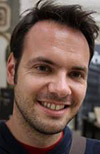
WD207.Advanced Discrete Choice Modelling Paul W. Thurner is Professor of Political Science at the University of Munich (LMU), Germany. He directs the Chair for Empirical Political Science and Policy Analysis. His main research interest is the statistical analysis of political choice behaviour (electoral choices, strategies of negotiation, network choices). Since more than fifteen years he provides knowledge transfer workshops on Applied Discrete Choice Modelling (Conditional Logit, Nested Logit, Random Utility Models, Mixed Logit) and on Applied Political Network Analysis. |
|
 |
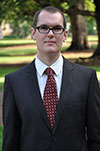
WD208. Interpreting Binary Logistic Regression Models Markus Wagner is an Assistant Professor at the University of Vienna. His work examines party competition and electoral behaviour, with a particular focus on the role of issues and ideologies, and he has published in Comparative Political Studies, the British Journal of Political Science and the European Journal of Political Research, among others. |
|
 |
WD209.Inferential Network Analysis Skyler Cranmer is the Carter Phillips and Sue Henry Associate Professor in the Department of Political Science at The Ohio State University. His research lies at the intersection of political methodology and international relations. His primary research interests are in the development of techniques for statistical inference with network data, particularly as applied to conflict processes. |
|
 |
WD210.Introduction to Bayesian Inference Susumu Shikano is Professor of Political Methodology at the University of Konstanz. His research interests are various topics of comparative political sociology and political economy. He teaches electoral politics, coalition formation and methodology in political science. |
|
 |
WD211. Panel Data Analysis: Hierarchical Structures, Heterogeneity and Serial Dependence Christian Aßmann's research interest focuses on non-nested model comparison, modelling of latent heterogeneity in nonlinear panel settings, and development of corresponding estimation routines, especially Bayesian estimation routines. His academic career can be summarised as follows: Diploma (2004) and PhD (2009) in Economics (Statistics and Econometrics) at Christian-Albrechts-Universität zu Kiel, Germany. He has been a lecturer at Otto-Friedrich-Universität Bamberg and operational manager of the NEPS/LIfBi methods group since 2009. |
|
 |
WD212. Multilevel Regression Modelling Levi Litvay is an Associate Professor of Political Science at CEU Budapest, and holds a PhD in Political Science from University of Nebraska-Lincoln, where he also studied Survey Research and Methodology. Predominantly a methodologist, Levi focuses on new, interdisciplinary analytical strategies to complex problems and research questions. Currently researches applied statistical methods, political behavior and political psychology. |
|
 |
WD213. Correspondence Analysis Philippe Blanchard is a researcher in political science at the University of Lausanne, Switzerland (From Sept. 2014: University of Warwick, UK). He works on green politics, political communication, and methods for social and political sciences: multivariate statistics, longitudinal methods, interviewing and content analysis. He is presently conducting research about gendered careers in trade unions, transnational economic elites, and the public controversy about nuclear energy. He has taught methods and techniques for social and political sciences in France, Switzerland, Austria, Danemark and the USA. |
|
 |
WD214. Agent-Based Modelling in the Social Sciences Nils B. Weidmann is Professor of Political Science at the University of Konstanz, Germany. He received a MSc in Computer Science from the University of Freiburg in 2003, a MA in Comparative and International Studies from ETH Zurich in 2008 and a PhD in Political Science from ETH Zurich in 2009. He was a Marie Curie Fellow at the Centre for the Study of Civil War, International Peace Research Institute Oslo (2011-12), a Postdoctoral Associate and Lecturer at Yale University (2010-11), and a Postdoctoral Research Associate at Princeton University (2009-10). |
|
 |
WD215. Age-Period-Cohort Analysis Anja Neundorf is an Assistant Professor at the University of Nottingham. She has previously worked as a Post-doctoral Prize Research Fellow at Nuffield College at the University of Oxford after receiving her PhD in Political Science from the University of Essex in 2010. Her research interests lie at the intersection of political behaviour, comparative politics, and research methods. |
|
 |
WD218. Structural Equation Modeling (SEM) with R Ulrich Schroeders is Assistant Professor of Educational Research at the Bamberg Graduate School of Social Sciences (BAGSS) at the University of Bamberg. His focus is on psychological assessment, especially technology-based assessment, intelligence research, and competence testing in educational large-scale assessment. |
|
 |
WD219. Respondent-Driven Sampling (RDS) (Using social networks to sample and analyse data from hard-to-reach and hidden populations) Lisa Johnston is an international consultant, with affiliations at the University of California, San Francisco, Global Health Sciences, and Tulane University School of Public Health and Tropical Medicine. Her primary expertise is in sampling methodologies, survey design, and planning and implementing research among hard-to-reach populations for the World Health Organisation, CDC, UNDP, UNAIDS, UNICEF and World Bank. She provides technical assistance and training in sampling strategies, including respondent driven sampling (RDS), cluster and time location sampling, qualitative and quantitative research techniques, population size estimation, survey questionnaire design and analysis of survey data. She has authored/co-authored numerous journal articles, has written a training manual on implementing RDS, and has co-authored two books. |