
Menu
Menu

Install this application on your home screen for quick and easy access when you’re on the go.
Just tap then “Add to Home Screen”

The ECPR's Lifetime Achievement Award is presented on a biennial basis to a scholar who has made an outstanding contribution to European political science.
It carries with it a fund of £4,300.
Nominations open: Monday 17 November 2025.
Deadline for nominations: Friday 9 January 2026.
To nominate, please use the Nomination Form which will display at the top of this page during the nomination period.
The prize is open to scholars in all fields of political science, and candidates need not be affiliated with a Member institution.
Nominations must include, as 2 separate PDF files:
We strive to define outstanding contributions as inclusively as possible, and welcome nominations of candidates from non-traditional backgrounds.
Self-nominations are not accepted.
Members of the ECPR Executive Committee, ECPR Director, or Editors of any ECPR books, journals or blog are not eligible for this prize. However, we do not wish to penalise these individuals for their generous work within our organisation. Therefore, members of ECPR senior staff (EC, Director) are eligible to be nominated for prizes after their term has ended, and after a further three-year buffer period. Editors, meanwhile, are eligible to be nominated after their term has ended and after a one-year buffer period.
If a nominator attempts to nominate an excluded person, they will be informed of this policy by Harbour House staff, as well as the year in which the person will be eligible, if applicable.
The winner will be announced in Summer 2026.
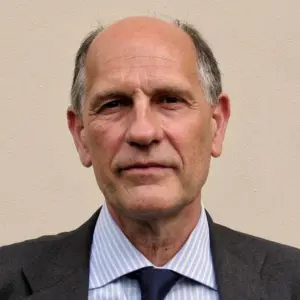
We are delighted to announce that the biennial ECPR Lifetime Achievement Award in 2024 was presented to jointly awarded to two exceptional scholars, each of whom has made a remarkable impact on our field as educators, mentors, and leaders: Myra Marx Ferree of the University of Wisconsin-Madison, and Richard S. Katz, from Johns Hopkins University.

Myra Marx Ferree retired in 2019 from the University of Wisconsin-Madison where she was the Alice H. Cook Professor of Sociology and a member of the Women’s and Gender Studies Department. She currently serves as a seminar co-chair for the Minda De Gunzburg Center for European Studies at Harvard University, and was awarded the 2024 Centennial Medal of this Graduate School.
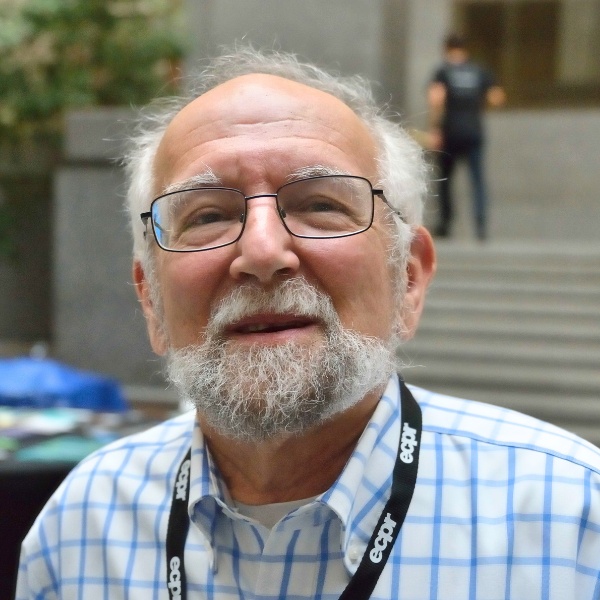
Richard S. Katz is Emeritus Professor of Political Science at Johns Hopkins University in Baltimore, where he served as graduate director (1985–1995 and 2003–2009) and department chair (2009–2015).
We are delighted to announce that our 2022 Lifetime Achievement Award has been bestowed jointly upon Beate Kohler of the University of Mannheim and Jean Blondel of the University of Siena, each of whom has also had an incredible impact on our discipline – as teachers, as mentors, and as leaders.
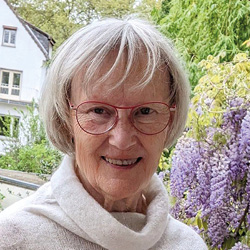
Beate Kohler started her academic career as Director of the Institute for European Politics (Bonn 1969-73). Professorships followed at Darmstadt University (1972-1990), at Mannheim University (1990-2007) and postretirement a Distinguished Professorship at the University of Bremen (2008-2012). She has been a Visiting Professor at universities and academic research institutes in many places in Europe and in China.
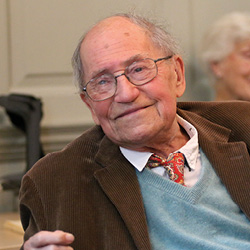
Jean Blondel (1929 - 2022) founded the Department of Government at the University of Essex in 1964, where he also played a pivotal role in the founding of ECPR and served as its Director for the first ten years of its existence. Having left Essex in 1984, he was appointed scholar of the Russell Sage Foundation in New York in 1984 before becoming professor of political science at the European University Institute in Florence from 1985 to 1994. Beside these more regular affiliations he has taught in many universities around the world, from Leuphana University of Luneburg to the University of Seoul.
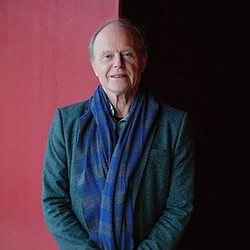
David Miller is a Senior Research Fellow at Nuffield College, Oxford, and his association with Nuffield College stretches back more than four decades, but recently he helped found the Masters of Public Policy at the Blavatnik School of Government, a one-year programme designed to introduce public sector practitioners from around the world to the theory and practice of public policy. During his long career, he has supervised 49 PhD students, and been a Visiting Professor at universities across the world.

Joni Lovenduski has been a visiting scholar at universities across Europe and in the United States. She has won the Isaiah Berlin Prize of the UK Political Studies Association, and is a Fellow of the British Academy and Academician of the Academy of Social Sciences. A former member and vice chair of the ECPR’s Executive Committee, Joni Lovenduski has also served on the ESRC Research Grants Committee and the Research Council of European University Institute.

R.A.W. (Rod) Rhodes, Professor of Government (Research) at the University of Southampton and at Griffith University, and Emeritus Professor of Politics at the University of Newcastle. Professor Rhodes is life Vice-President and former Chair and President of the Political Studies Association of the United Kingdom; a Fellow of the Academy of the Social Sciences in Australia; and an Academician of the Academy of Social Sciences (UK). He has also been a Fellow of the Royal Society of Arts, editor of Public Administration from 1986 to 2011, and Treasurer of the Australian Political Studies Association, 1994–2011.
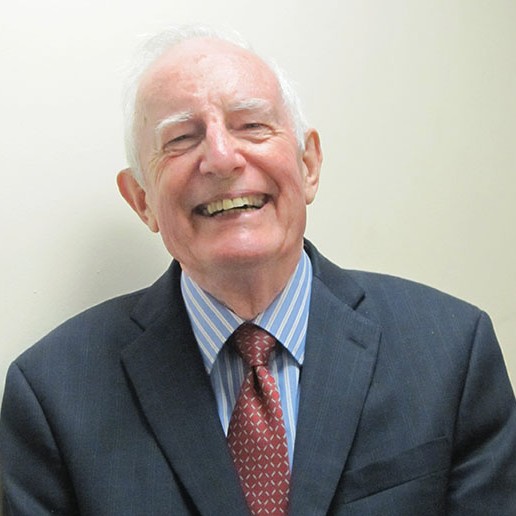
Over the past four decades, Professor Budge of the University of Essex has achieved significant qualitative and quantitative research impact, has published a number of leading research monographs and was a founding member of the Manifesto Research Group. Budge also played an important role in strengthening the field of European political science through his involvement in the ECPR, in particular as Executive Director between 1979 and 1983, and through his important contribution to the training of young political scientists, as Director of the Summer Schools in Social Science Data Analysis.
During his career, Hans-Dieter of Freie Universität Berlin has been Director of Research on Institutions and Social Change at the Social Science Research Centre Berlin (WZB); a Visiting Scholar in Paris, Canberra, California and Michigan; a member of various distinguished scientific boards and committees; Vice President of the Council of the Institute for Strengthening Democracy in Bosnia, Sarajevo; member of the International Advisory Board of the Encyclopaedia of Democratic Thought; and a member of the TMR Network 'Representation in Europe'. He was also President of the European Political Science Network (epsNet) and a member of the Executive Committee of the ECPR.
Gerhard Lehmbruch's research focused on institutions, political regulation and comparative politics, including 'negotiated democracy' and structural incongruence between federal state polities and party competition, Strukturbruchthese. In 2003, the German Political Science Association honoured him with the Theodor-Eschenburg-Prize for his lifetime achievements.
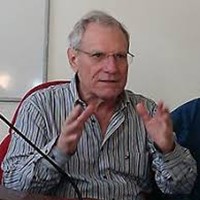
Philippe Schmitter studied at the Graduate Institute for International Studies of the University of Geneva and subsequently took his doctorate at the University of California at Berkeley. In 1967 he was appointed as assistant professor by the Department of Political Science of the University of Chicago, where he later became full professor. Between 1986 and 1996 he taught at the European University Institute (1982–86), then moved to Stanford (1986–96). He taught again at the EUI until 2004 and was thereafter nominated Professorial Fellow of the Department of Social and Political Sciences of that Institute.
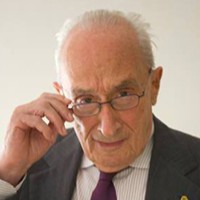
The inaugural prize was awarded to Giovanni Sartori (1924–2017), who graduated in Political and Social Sciences from the University of Florence in 1946 where, after qualifying for teaching History of Modern Philosophy and Doctrine of the State, he became lecturer of Modern Philosophy (1950–56) and Political Science (1956–63), and professor of Sociology (1963–66). After becoming full professor of Political Science and teaching at Florence University from 1966 to 1976 he taught also at the European University Institute (1974–76) and later became professor of Political Science at Stanford University (1976–79). Latterly, Professor Sartori was Albert Schweitzer Professor Emeritus in the Humanities at Columbia University, and Professor Emeritus at the University of Florence. After having given a vital contribution to the development of the Rassegna Italiana di Sociologia, Professor Sartori was the founder and longtime director of the Rivista Italiana di Scienza Politica (1971–2003).